I Let AI Design My Home Office
I have a home office I don’t use. It has an L-shaped desk, a bookshelf, good light. It has everything a productive person supposedly needs. And for most of the workday, I’m in my bedroom, sitting in a reading chair with a blanket over my legs and at least one cat, doing my best work.
I knew this was a problem. I just didn’t want to fix it.
I’m an introvert, even within my own home. I’ve been working fully remote since COVID, and somewhere in those early pandemic years I built myself the perfect little nest — a reading chair in the corner of my bedroom, a lift-top coffee table that rose up to meet me, my laptop, at least one cat, and a blanket. I had figured out exactly how to arrange my body so that everything I needed was within reach without having to move.
I was comfortable. I was warm. I was, technically, working from the room where I sleep, which meant my brain was getting constant mixed signals about whether it was supposed to be focusing or winding down — but I had gotten so good at ignoring that particular problem that it barely registered anymore.
Your brain builds strong context associations between environments and behaviors — a process called state-dependent learning. When you sleep and work in the same space, those associations compete with each other. The bedroom cues rest and safety, and your brain doesn’t easily switch modes just because you opened a laptop. For ADHD brains specifically, environmental context plays an outsized role in initiating and sustaining focus. Creating a dedicated space — even a small, cozy one — isn’t just an aesthetic preference. It’s giving your brain a cleaner signal.
→ Read more: Why your brain can’t focus where it sleeps
The home office sat there. Nice enough. L-shaped desk, bookshelf, good light. Everything a productive person supposedly needs. I went in occasionally. I always ended up back in my chair.
I knew I needed to come out of my room. I just didn’t want to.
One of my therapists (yes, I have more than one) eventually named what was happening. The bedroom worked because it was safe, contained, and built entirely around how my brain actually operates. The office didn’t work because it was built around what an office is supposed to look like. She suggested I take the whole problem to AI, because she knows that’s how I think through things. So I did.
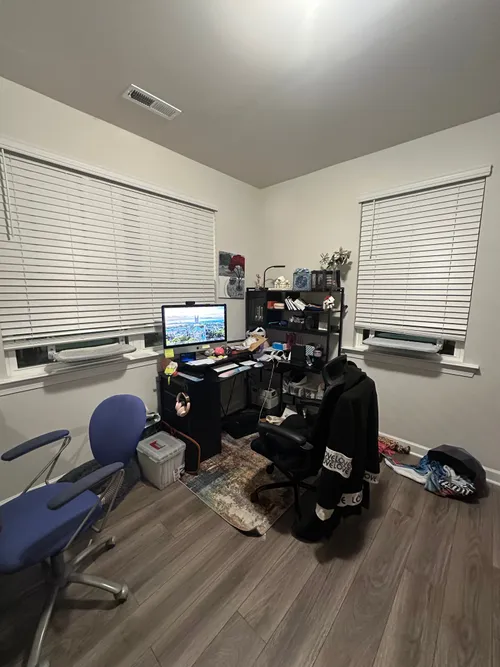
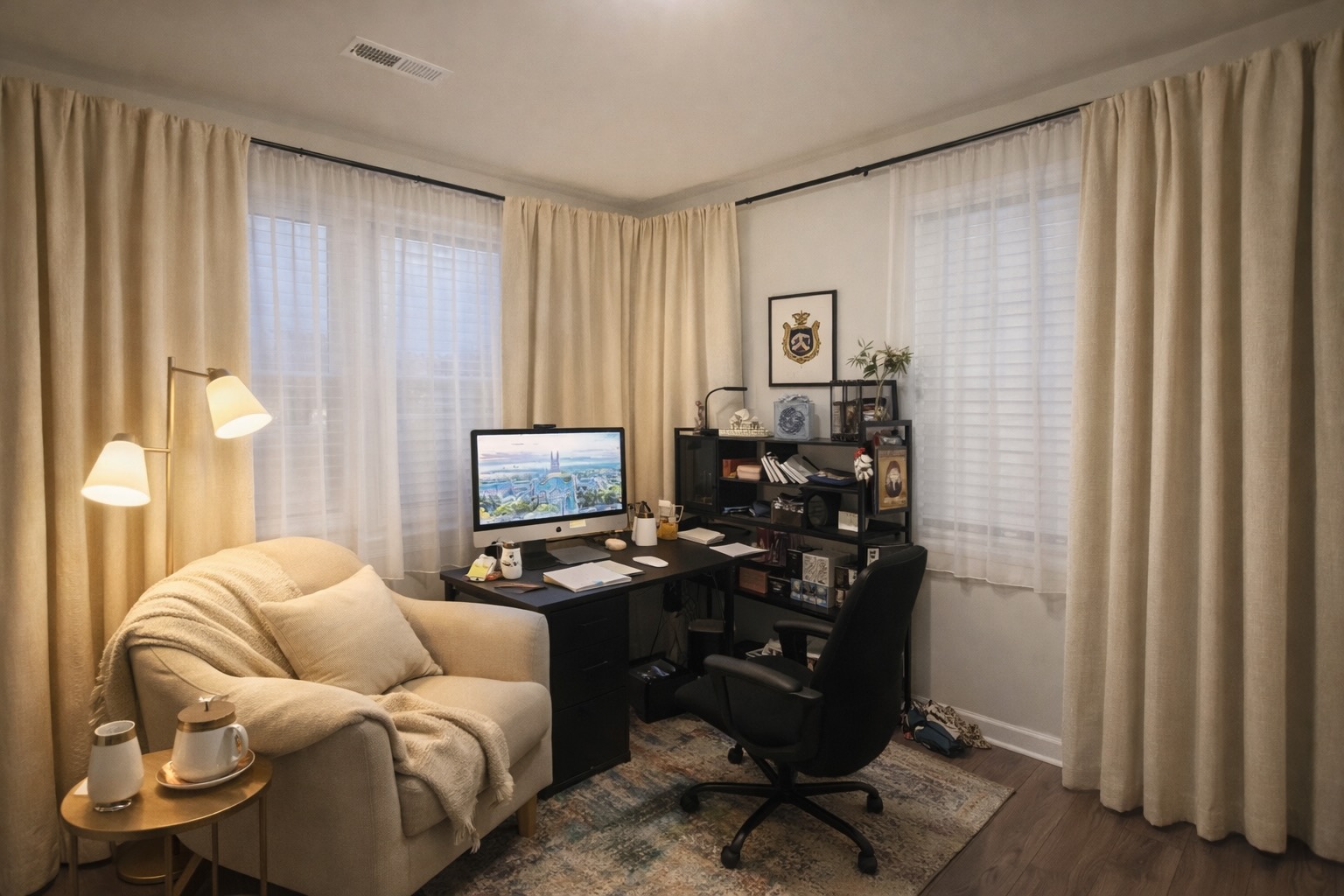
That mockup image looked so inviting and became my reference the entire time I was working on the office. When I finally got the curtains up and the chair in the corner, I went back and compared. It’s not identical. But it’s closer than it had any right to be.
The chair search took longer than I expected. We must have gone through 15 to 20 options before I found one I could commit to. The first round of suggestions was full of ergonomic cross-legged chairs, the ones specifically designed for people who sit sideways. They technically fit my criteria but somehow looked like they’d been designed by someone who had never actually sat cross-legged in their life. Too structured. Too intentional about it. I kept going back with more specific language: not just cross-legged, but contained. I wanted to feel held, not perched. At one point I seriously considered giving up on the whole project and just putting a nicer chair in my bedroom so I could stop fighting it. My therapist had opinions about that.
Eventually I landed on a nest chair — wide and deep, with sides high enough to curl into, the kind of thing that looks like it was designed for someone who reads for three hours at a stretch. But I wasn’t sure it would actually work for working. So I sent AI a photo of my current setup first.
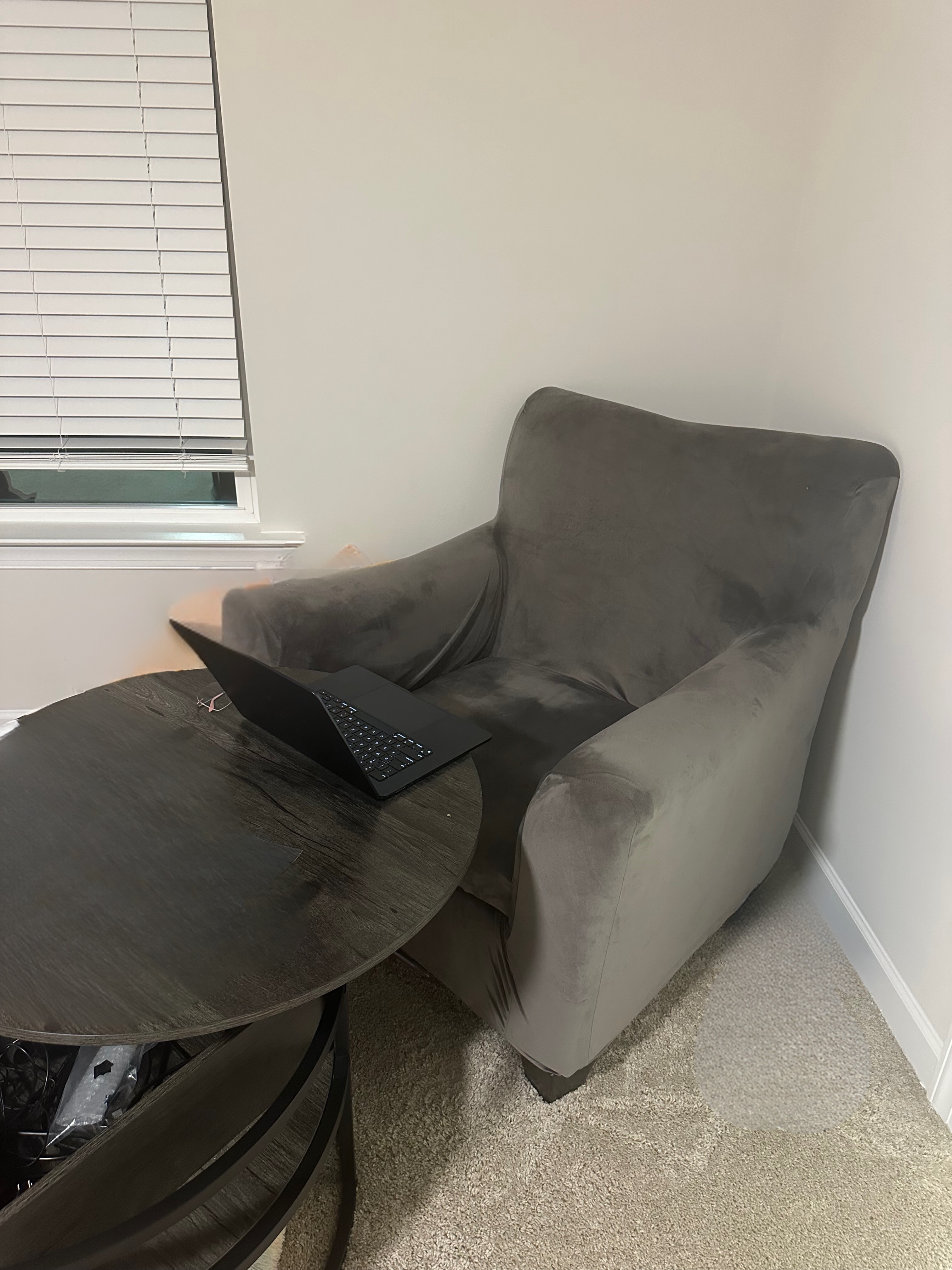
This is where I currently sit. The table is a lift top.
That last line reframed the whole project.
A sensory-regulating seat that happens to allow work.
And then: you don’t need the chair to match the desk. You need the work surface to meet you.
I had been thinking about this backwards — trying to find a chair that would fit my existing setup, when the real question was what surface would fit me. Once I let go of that, the solution was obvious. The desk wasn’t going anywhere. But it didn’t have to be my primary workspace anymore. I needed a table at the right height for the chair I actually wanted to sit in.
I sent the spec sheet for the nest chair so AI could run the numbers.
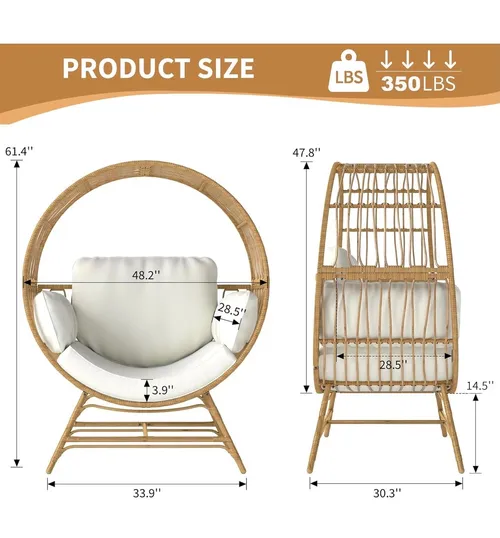
It went through the dimensions point by point: seat height, seat width, back angle, the high curved sides. Not as a list of specs but as a set of answers to problems I’d been having without ever naming them — the numb legs, the circulation issues, the feeling of needing to be contained rather than just seated. Then it calculated the exact table height for proper elbow angle, what would fit in the corner without crowding my husband’s side of the room, how the curtains could span the full window wall. It worked within the actual constraints rather than around them.
When the chair finally arrived, my husband looked at me like I had lost my mind.
But I had a plan.
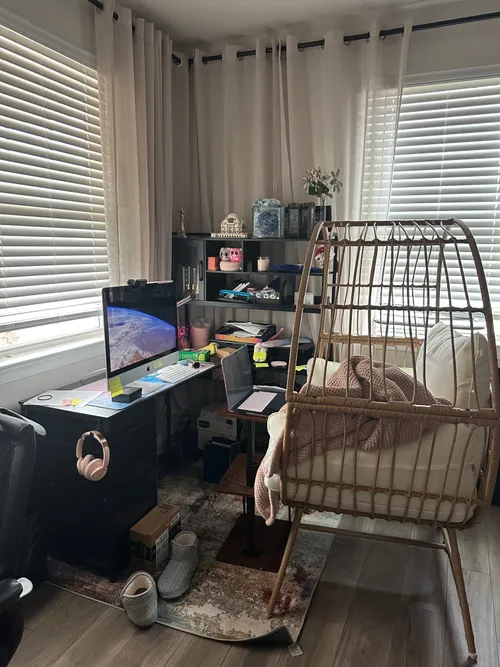
My setup was complete. Chair in place. Curtains hung. AI even suggested a specific color for the blanket. It was actually inviting. There was still a desk with a large monitor on it that didn’t fit into my nest, and I wasn’t ready to deal with that yet. So I just worked from my laptop in the chair. When the 15-inch screen started feeling like doing surgery through a keyhole, AI helped me solve that too: in the Apple ecosystem, one mouse can control both computers. Laptop as primary screen, big monitor holding the static stuff like calendar, email, Slack, and Squirrels (my personal productivity app). Two screens, one mouse.
I go into my office (almost) every day now.
The desk is still chaotic. That’s the next project…and another post.
The cats, however, have made it clear that the chair is also theirs.
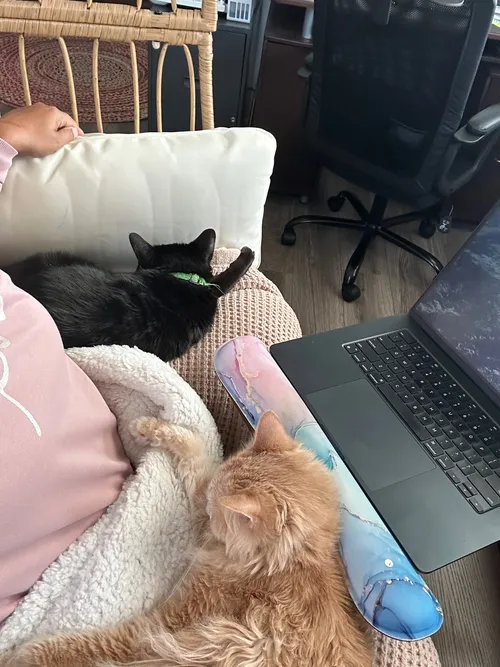
I don’t have a door on the office. And anyone who has ever tried to close a door when a pet is on the other side of it knows exactly how that ends.
ADHD brains are not lazy — they’re reward-sensitive. The dopamine system that drives motivation works differently when you have ADHD, which means willpower alone rarely moves you toward something your brain doesn’t already associate with a payoff. This is why “just use the office” never worked, and why building a chair you genuinely want to sit in actually did. The chair became a reward in itself — something the office has that the bedroom doesn’t. That’s not a trick. It’s working with your neurology instead of against it.
→ Read more: Why ADHD brains need the reward to come first — coming soon
- Don’t try to make your office efficient. Make it so you actually want to be in it. Those are different problems with different solutions.
- The goal isn’t to correct how you work — it’s to support it. Cross-legged, blanket, contained: design around that, not around what productivity is supposed to look like.
- The chair is the reward. Your brain needs a reason to go somewhere new. Give it one that’s genuinely better than staying put.
- You don’t need the chair to match the desk. You need the work surface to meet you. That one reframe changed everything.
- Send AI the actual product listing and your current setup photo. It can cross-reference dimensions and name problems you didn’t know you had.
- The back-and-forth is the point. Your instinct plus AI’s pressure-testing gets you somewhere neither of you would have landed alone.